Customer success story
A very small IT department, a very large global company
Most integration comparisons are decided on features. This one was decided on how little attention the thing would need afterwards. The Ken Blanchard Companies runs leadership training worldwide with an IT team small enough that any high-maintenance system would be unaffordable in practice. That single constraint shaped the shortlist.
The Ken Blanchard Companies has been training managers for more than 35 years and puts around 150,000 people a year through its programmes, from the First-time Manager course based on The New One Minute Manager to Situational Leadership II. Internally it runs an older on-site Microsoft Dynamics NAV alongside cloud-based Salesforce. Rapidi keeps customer data consistent between the two, with no custom programming on Blanchard’s side and no daily minding.
Talk to an integration consultant
The constraint that decided it
Eric Clay, IT director at Blanchard, states the position plainly.

We have a very small IT department supporting a very large global organization, so we really need to have robust systems that integrate directly and that don’t need a lot of care and maintenance on our end and can run autonomously.
Read that as a purchasing rule and a lot of options fall away. A platform that needs a developer on call is not cheaper because the licence is cheaper. The real price of an integration is the attention it consumes every week for years, and a small team pays that price at a much higher rate than a large one.
Off the shelf, and specific to NAV
Blanchard arrived at the question the usual way: Salesforce was chosen as the CRM, and the customer data in the on-site Dynamics NAV had to reach it without anything being lost on the way. Two things lifted Rapidi out of the field.
“It was very competitively priced,” Clay says, “and it also had some specific integration to go into Microsoft Dynamics NAV which would require less custom programming on our end, so that really made it an appealing product from both those standpoints.”
He puts the second point more bluntly elsewhere: a lot of the other systems they looked at would have required considerably more custom programming to get the data synced properly, and anything that runs off the shelf and needs as little of their time as possible is, in his words, really ideal.
We were introduced to Rapidi when we made a decision to go with Salesforce.com as our CRM system and, Rapidi of course having a number of preconfigured set ups, worked very seamlessly with NAV.
The older NAV version
Blanchard’s Dynamics NAV was not current, and that was one of the main concerns going in. An older ERP narrows the field quickly: connectors written against the newest version assume conveniences an older one does not offer, and the gap gets filled with custom code.
It held. By their account the implementation was on target, intuitive and painless, aside from the small learning curve that comes with any integration product. Where error reports did appear, Rapidi’s reading of them kept the work on Blanchard’s side small.
Support that has used the ERP itself
Asked what he would miss most had they gone with another system, Danny Amen, application programmer at Blanchard, did not name a feature.
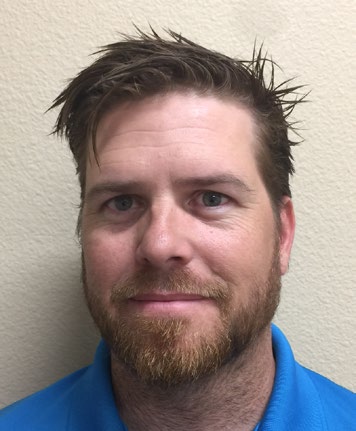
The experience that the Rapidi support has with Microsoft Dynamics NAV itself. It seems like everybody I’ve worked with has direct experience with Microsoft Dynamics NAV, almost as developers or just very experienced. Not all the other vendors have that level of knowledge with the product.
That is the same constraint seen from the other side. When support knows the ERP as well as its own product, a question gets answered instead of escalated, and the customer’s small IT team never has to become expert in both systems. Clay says the same of the people he deals with: they have been very responsive, helping with issues when they arise.
Take it with you
The whole story as a PDF
The constraint that decided the shortlist, the older NAV version, and support that had used the ERP itself.
One of the more successful partnerships
Clay’s summary of the relationship is short: it is, he says, one of their more successful business partnerships. What he credits is not one thing. The product, yes, but also the people on the phone and the fact that they have worked with both systems.
That combination let a company with a very small IT department run an integration for a very large one, and largely stop thinking about it. Which is the point. The best outcome of an integration is that nobody at the customer has to talk about it any more.
The Ken Blanchard Companies is the global leader in management training. For more than 35 years Blanchard® has been creating the best managers in the world, training over 150,000 people each year, from the award-winning First-time Manager programme — based on the best-selling business book The New One Minute Manager® — to Situational Leadership® II, the most widely taught leadership model in the world. It is the provider of choice for Fortune 500 companies as well as small and medium businesses, governments, and educational and nonprofit organisations. More about the company at kenblanchard.com.

Is your IT team smaller than your company?
Tell us how much time a month you can give an integration. That number should drive the design, not the other way round.