Customer success story
ZSK and Rapidi, weaving together new sales
ZSK’s sales reps had no direct access to Dynamics NAV. To get a figure, a quote or a new contact into the system, they phoned or emailed Finance and waited. Salesforce alone would have made a second island. Rapidi joined the two.
ZSK Stickmaschinen GmbH of Krefeld builds embroidery machines and is the world leader in technical embroidery. Its sales team worked without direct access to the company’s Dynamics NAV installation, so every number and every new contact went through someone in Finance. ZSK implemented Salesforce and connected it to NAV with Rapidi. Contacts move in both directions, and quotes and orders written in Salesforce land in NAV ready to invoice.
Talk to an integration expert
About ZSK
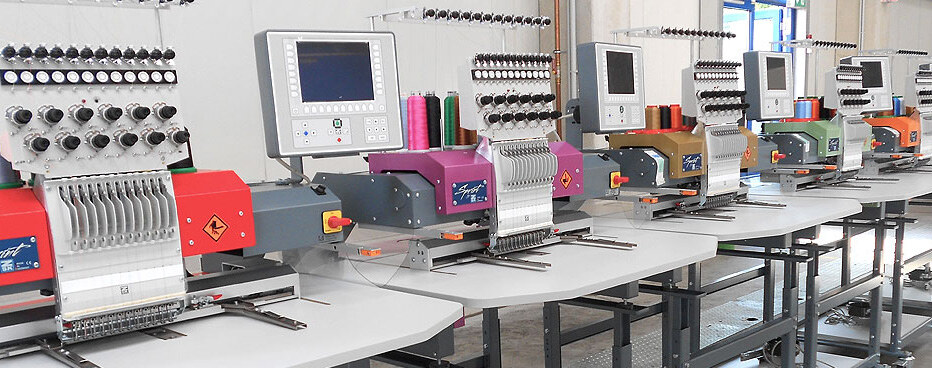
ZSK Embroidery Machines (ZSK Stickmaschinen GmbH) is a world leader in the design and manufacture of embroidery machines, enough so that the “Top 100” awards organisation named it one of Germany’s most innovative companies in 2017. That was not nostalgia for machines that first appeared in the 19th century, automating a technique already thousands of years old. The award recognised what ZSK does with embroidery now: stitching carbon fibre and wire.
Alongside textile embroidery, ZSK specialises in what the industry calls technical embroidery, because more and more customers are asking for solutions that do not exist yet. The company is based in Krefeld, near Düsseldorf, with sales representatives around the world. Its site at zsk.de runs in German and English.
Why the machines are custom
Technical embroidery projects are long. “The complexity of technical embroidery projects means that our company will sometimes need to work closely together with the customer on a new project for one or two years to address all aspects,” says Florian Nicolai, IT Consultant for ZSK. “It takes that long for them to perfect their design, and for us to perfect the machine to manufacture them.”
Some things simply cannot be made another way. Embroidered ‘Functional Sequin Devices’, sensors and wires set into textile or industrial components exist because embroidery can place them and nothing else can, which is what makes customising the machinery worth the effort. One genuinely new application is reinforcing fabric by orienting, placing and attaching reinforcement material with an embroidery machine, used where a structure needs variable geometry ply stacks, where fabric needs reinforcing in one specific place, or where fabrics must be assembled.
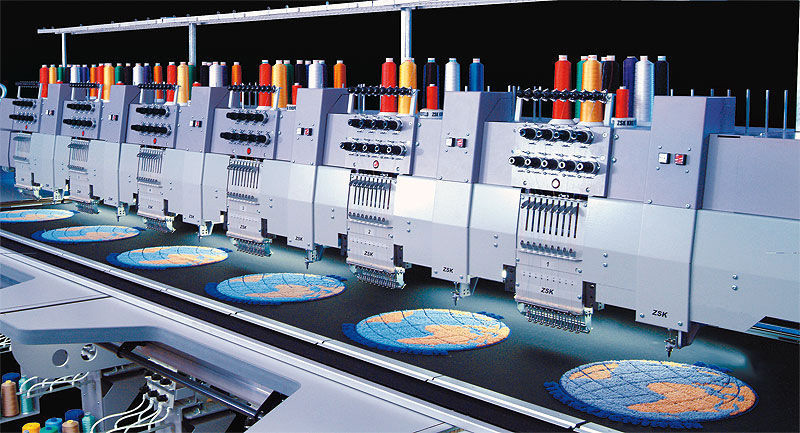
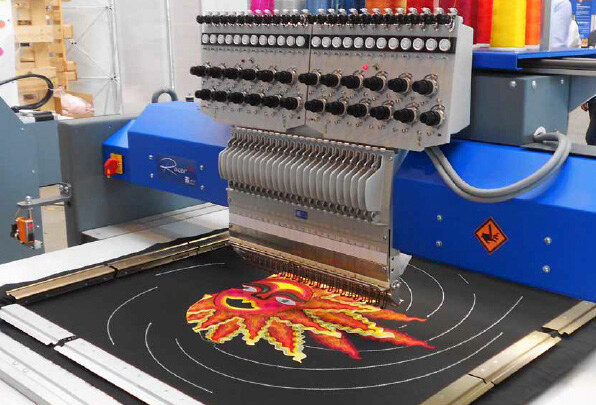
We are now the world leader in technical embroidery.
Working in a data drought
ZSK decided to upgrade the tools available to its sales team. The company already had a Microsoft Dynamics NAV installation the team could use, with effort. Sales reps had no direct access, so to get the data or the reports they needed, or to have something entered such as a new contact or a quote, they phoned or emailed someone in Finance. Their data needs were met only when they could find a NAV user who was not too busy with something else.
The inefficiency and the room for error in that are obvious. What is less obvious is what it does to expectations. The sales team had grown used to working in a data drought, not even imagining they might one day have information that made them more effective.
So ZSK implemented Salesforce. On its own, that would have created a second island of data with no efficient way to keep the two in step. Nicolai heard about Rapidi at a trade show and went to find out whether it could take ZSK from a place where the right hand did not know what the left hand was doing, to one where the sales team could have both: software that made them productive, and current data out of NAV.

Take it with you
The whole story as a PDF
Six pages: the data drought the sales team worked in, what crosses in both directions, the trade-fair business cards, and Florian Nicolai in his own words. Yours after one short form.
What the sales team got
Our sales team gets more information than ever before. They know when the invoice is produced, when it’s paid, what the customer balance is. We are getting closer to a 360 degree view of each customer.
The everyday gains are concrete. “When they go to a trade show and get a stack of business cards, they can easily find out which ones are from existing customers. When leads are sifted, and the most likely prospects are converted from Leads to Contacts in Salesforce, the contact is automatically added to NAV.”
And the loop closes without anyone being interrupted. “The sales representatives don’t have to contact a NAV user to add the needed contacts, and describe what they need in a quote or an order. They do their work in Salesforce, and when it’s done, it’s right away in NAV and ready for the generation of an invoice, which also reduces the workload of our Finance team.”
Adoption took some persuading, and the data is what did the persuading. “About 80% of our sales team wanted to try Salesforce right away, but it was the access to data that convinced the other 20% to come on board. Sales people always say that they don’t have the time to learn something new, but when you can show them that the new software will save them time, they find the time to learn. Salesforce is a great tool, but we couldn’t have sold it to all of our Sales team without the up to date data that Rapidi produced.”
Nicolai sums it up plainly: “Salesforce is now the single point of truth for our sales team. They not only have the data they need, but it’s up to date.”
The integration experience
Asked whether any threads broke during the integration, Nicolai could not think of one, because Rapidi did more than he had expected it to. “I just didn’t expect an out of the box solution. I was surprised to find that Rapidi not only gave us this, but that it also came with the ability to easily customize our individual business process rules. I was astonished with how powerful the interface was. The surprises were all positive.”
One capability stood out. He was “particularly impressed that Rapidi could handle the bidirectional shifting of some data, such as contacts. It is a real advantage to allow both the Finance team and the Sales team to update contact data.”
Advice for others
For anyone facing the job of joining two unlike systems, Nicolai splits the problem in half.
Half of the challenge is the software, that Rapidi solved, and the other half is finding consultants who understand both systems. In our case, these were Salesforce and Dynamics NAV. For us, that knowledge was provided by Rapidi consultants. I wouldn’t have wanted to work with people who knew one system well, but who were learning the other system along with us.
Asked what he would do if Rapidi were taken away, he protested: “I never want to work without Rapidi again. Never! Never! Never!”
Sales asking Finance for numbers?
Tell us which ERP holds the data and which CRM your team lives in, and we will tell you whether a standard Rapidi template covers you.