salesforce erp integration

Best Salesforce Integration Tools: Top 8 Solutions Compared
The top Salesforce integration tools are Rapidi, Commercient, Boomi, Jitterbit, MuleSoft, DataOrbis, TIBCO Scribe, plus Copado, Gearset, Hutte, and Heroku's Toolkit for DevOps/admin needs. Rapidi is the strongest fit for Salesforce–Microsoft Dynamics ERP integration; MuleSoft and Jitterbit suit larger, more technical enterprises.
→
Salesforce Field Service ERP Integration: A Practical Guide
Field service teams and finance teams often work in two separate systems. Salesforce Field Service runs the jobs out in the field, while your ERP runs the money side, like orders, invoices, and pricing. This guide shows how to connect the two, so a job done in the field flows straight through to billing in your ERP, and finance data flows back to your technicians.
→
ERP - CRM integration: How should data flow between systems?
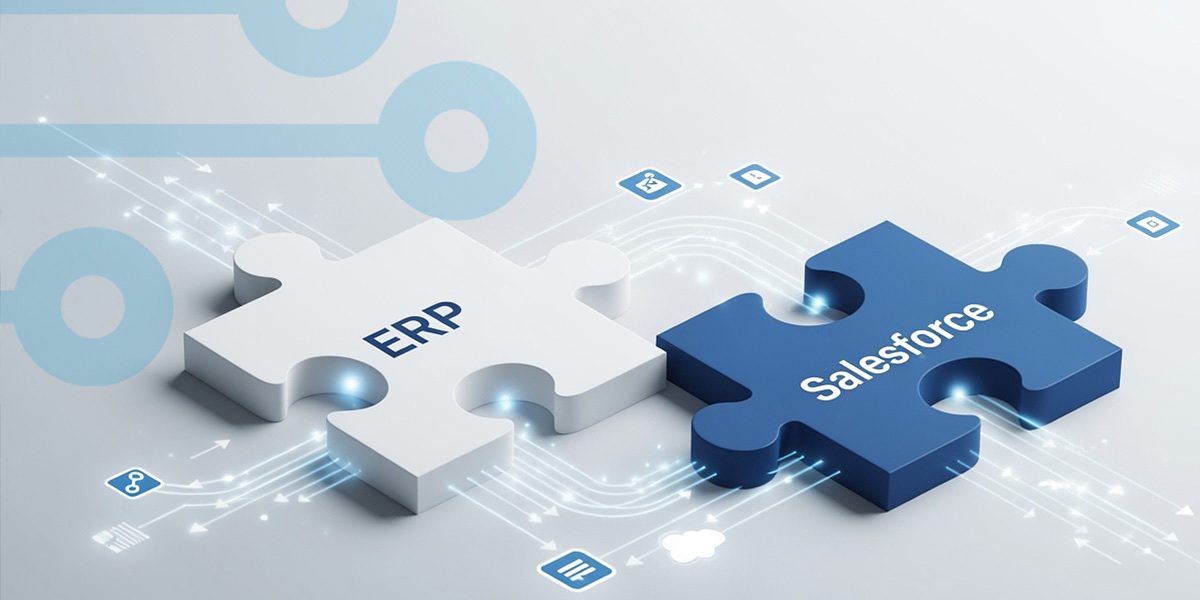
Data between ERP and CRM systems should flow in a structured and bidirectional way, sharing key information like customers, orders, products, and payments in real time to eliminate manual work, ensure data consistency, and support better business decisions across teams.
→
What is an ERP Integration with Salesforce in 2026 and beyond?
An ERP Integration with Salesforce means connecting Salesforce with ERP systems so customer, sales, finance, inventory, and order data stay automatically synced in real time. This removes manual data entry, reduces errors, and ensures all teams work with the same up-to-date information.
→
What's the Best Integration Platform? Rapidi vs Workato vs MuleSoft vs Boomi vs Zapier
Rapidi, Workato, MuleSoft, Boomi, and Zapier serve different integration needs across the iPaaS market. Rapidi specializes in ERP-CRM integration with 30+ years of Microsoft Dynamics expertise and pre-built templates that get companies live in hours, starting at $400/month. MuleSoft offers powerful API management for large enterprises with dedicated IT teams, though costs start around $80,000/year. Workato provides AI-powered enterprise automation with usage-based pricing. Boomi delivers reliable cloud-native integration for hybrid environments. Zapier suits small teams needing simple web app connections, starting free for basic tasks. The right choice depends on your industry (healthcare, banking, manufacturing, or retail each face unique integration challenges), technical resources, budget, and whether you need specialist ERP-CRM expertise or general-purpose automation.
→
What is the best NetSuite Salesforce integration?
Salesforce is largely recognized as the best cloud based CRM solution in the world. Similarly, NetSuite is one of the best cloud based ERP solutions with customers all over the world. Many companies wish to take advantage of both these prominent SaaS providers.
→
Our Approach to the Quote-to-Order Process in Salesforce
Salesforce is a great tool. However, if you haven’t used it to automate your quote-to-order process yet, you’re doing your sales team a disservice. It’s a major key to getting your team to adopt Salesforce. Streamlining the process will reduce the chance of errors and empower your sales and finance teams to use their time on more productive things than data entry.
→
Webinar On-Demand: How to Integrate Salesforce and Dynamics 365 Finance with no code
Effective communication between your business systems is key to smooth operations. Integrating Salesforce with Microsoft Dynamics 365 Finance may seem challenging—especially when earlier versions of Dynamics (like Dynamics AX) lack native timestamp features, making it difficult to track new or updated data accurately.
→
Benefit & Advantages Of Data Integration
This article explores the significant advantages of integrating ERP and CRM data systems by highlighting six key benefits, such as improved efficiency, seamless data sharing, and enhanced decision-making capabilities. By integrating these systems, businesses can eliminate manual data handling, reduce errors, and empower their teams with real-time access to crucial information, ultimately driving growth and competitive advantage.
→
What Are the Best Data Integration Techniques for Actionable Insights?
The best data integration techniques for actionable insights include uniform data access, common data storage, application-based integration, manual integration, and middleware integration. These approaches connect and unify data from different systems, helping organizations eliminate data silos and analyze information more effectively for better decision-making.
→
How to boost your Salesforce user adoption in 4 easy steps
So you have selected Salesforce to complement your Microsoft Dynamics ERP and get rid of old, disconnected processes.
→
What are the benefits of Salesforce CPQ? 8 advantages for sales teams
Salesforce CPQ helps sales professionals optimize and automate the entire sales process, from initial product configuration to final quote delivery. It enables sales teams to generate accurate quotes quickly, reduces the amount of human errors by automating pricing and configurations, and frees up sales teams to focus on selling. It can also suggest cross-selling and upselling opportunities and gives sales leaders improved data and tracking for better decision-making.
→
Cloud Data Integration vs On-Premise Integration: Key Differences, Benefits and Use Cases
Big data is no longer just a buzzword. The new volumes of data collected daily have pushed companies to value data more than ever before. Data quality and data accuracy have become essential components of any organisation's data management and digital data transformation strategy.Unifying and combining data between data warehouses and other systems is a must-do. This has led organisations to look at data integration tools. Companies must integrate their systems to optimise business processes and remove error-prone manual data entries. There are many benefits to data integration.The question is what data solution integration to choose. Are cloud-based data integration better than on-premise solutions? When is a cloud platform the right solution? This article will help you make an informed decision.
→
Maximizing ROI: Integrating Salesforce and ERP Systems for Success
There are many reasons to integrate Salesforce with ERP solutions, such as Microsoft Dynamics ERP (Dynamics 365 product suite such as Dynamics 365 Business Central, Finance (former Finance & Operations), Sales (former CRM), NAV, AX, GP). Integrated solutions provide accurate data to your staff.
→
Salesforce ERP integration can be done easily
Salesforce.com is a Cloud CRM solution used by businesses around the world to connect better with their customers and grow. The Salesforce team knows that their users often need to expand Salesforce.com’s capabilities with add-ons or even integrate Salesforce.com with other applications. This can help them get the best results and achieve their business goals.
→
Make Salesforce even more clever
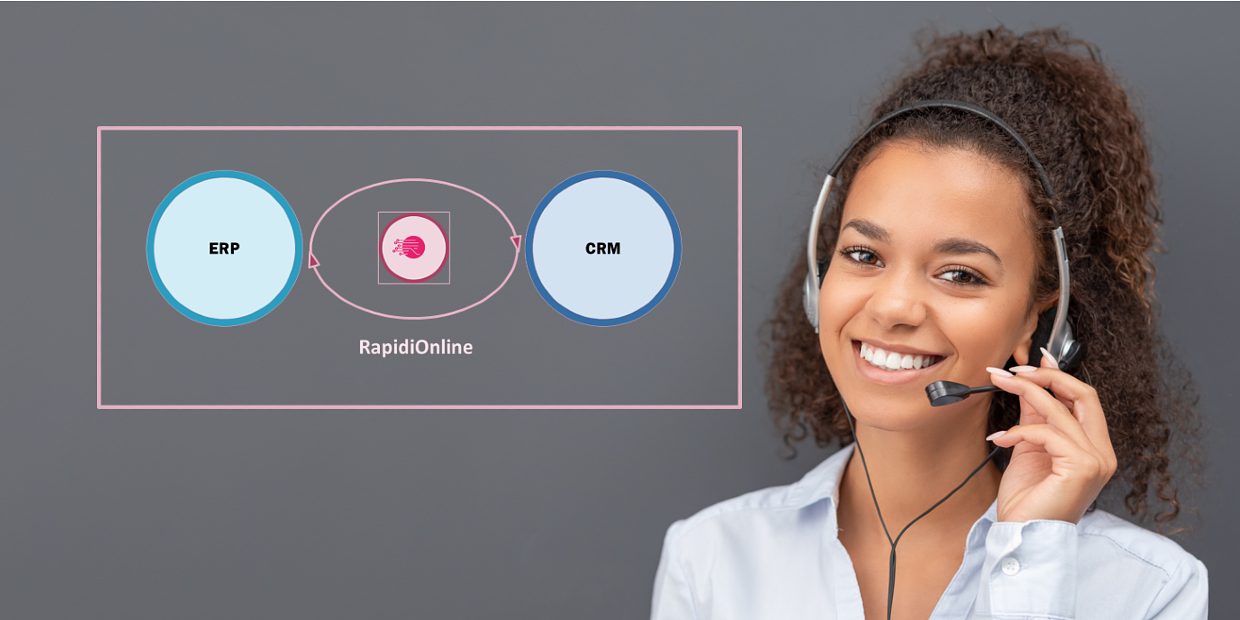
Salesforce is an excellent system. However it does not support all of your company’s functions. You are perhaps using an ERP system (for example Microsoft Dynamics) in parallel to Salesforce to take care of your accounting, your inventory or your fulfilment. Wouldn’t it be great to be able to bring this information into Salesforce, to get everything at one place?
→
How to choose a data integration consultant
Today, companies use an increasing number of data sources. They must control data quality and have a unified view of their data and a good master data management strategy. In the era of big data, integrating systems is often the right solution to keep data in sync, current and valid.
→
Get the full benefits of Salesforce Sales Cloud Lightning
You have probably already heard about Salesforce Sales Cloud Lightning and know that it is designed around the way you want to sell, and put data where you need it. But did you know that you can experience a lot of new benefits by combining this new user experience with a data integration tool such as RapidiOnline and thereby bringing data from other complementary systems into Salesforce?
→
Do you need both ERP and CRM? A close look with Rapidi
Do you absolutely need to have both ERP (Enterprise Resource Planning) and CRM (Customer Relationship Management)? Isn’t it enough to use just one of them? As a stakeholder in a business, you're best placed to understand the value you get from ERP and CRM systems, and whether you need both of your current solutions.
→