salesforce-dynamics integration

Best Salesforce Integration Tools: Top 8 Solutions Compared
The top Salesforce integration tools are Rapidi, Commercient, Boomi, Jitterbit, MuleSoft, DataOrbis, TIBCO Scribe, plus Copado, Gearset, Hutte, and Heroku's Toolkit for DevOps/admin needs. Rapidi is the strongest fit for Salesforce–Microsoft Dynamics ERP integration; MuleSoft and Jitterbit suit larger, more technical enterprises.
→
Salesforce Field Service ERP Integration: A Practical Guide
Field service teams and finance teams often work in two separate systems. Salesforce Field Service runs the jobs out in the field, while your ERP runs the money side, like orders, invoices, and pricing. This guide shows how to connect the two, so a job done in the field flows straight through to billing in your ERP, and finance data flows back to your technicians.
→
Data Integration Platform vs Custom API Integration: Which Is Better for Your Business?
While custom APIs can offer flexibility, they often require significant development time, ongoing maintenance, and higher long-term costs. A modern data integration platform, on the other hand, provides pre-built connectors, faster deployment, easier scalability, and centralized management across multiple systems.
→
How to Integrate Salesforce with Microsoft Dynamics 365 (ERP Use Case)
Varitronics integrated Salesforce with Microsoft Dynamics 365 Business Central by keeping Salesforce as the CRM, replacing their former Salesforce-based ERP, Ascent, with Business Central, and using Rapidi to connect the two. This gave sales, finance, and operations one connected process without manual re-entry, while allowing each system to stay focused on its own role.
→
Integrate Salesforce & Dynamics 365 ERP in 3 Steps
Connecting Salesforce with Microsoft Dynamics 365 ERP can transform how your teams work -breaking down silos, eliminating double data entry, and giving everyone access to the same up-to-date information. But where do you start?
→
Step-by-Step Guide: Salesforce to Dynamics 365 Integration
Some data integration projects can be complex and even become a complete mess if not managed properly and efficiently. Often, the success of a data integration project (for example a Salesforce ERP integration) starts with the quality of your data. It is recommended to do a thorough data clean up before getting started. This way, your integration project will not solve your data quality issues, it will only make them more visible. When data quality is in place, you can easily avoid troubles by following a structured approach. A good way to is start by defining the touch points and data integration routes you want to support.
→
CDS, CDM and Data Integration
Industries are grappling with the challenge of managing vast amounts of data across multiple systems and departments, leading to inefficiencies, inconsistencies, and limited access to real-time information.
→
What can Salesforce CPQ-ERP integration do for your business?
Salesforce CPQ Integration enables you to connect Salesforce CPQ to other business systems (such as ERP or billing systems) to automatically synchronise product, pricing, and order data. This integration reduces manual errors, accelerates the sales cycle, and improves data visibility.
→
Real-life benefits of Salesforce-Microsoft Dynamics NAV integration
A couple of years ago, I implemented a CRM system for my former company, and just as I am writing this blog article, I’m in the middle of rethinking my company’s pipeline management strategy and systems. Through these projects, I have realized that developing opportunities can easily be done within Salesforce and other CRM systems because often the process starts there. However in order to deliver great service to your customers in the long term, you need to integrate your ERP and CRM systems.
→
Salesforce - Microsoft Dynamics 365 Data Migration: Why and How?
Companies nowadays have to deal with vast amounts of data. Consequently, big data, data storage, data management, and data migration have become topics of the utmost importance for business leaders. Maintaining a high level of data quality is crucial. Organisations must find the best data storage solution and software solutions such as ERP, CRM, WMS, etc.Assembling the perfect set of solutions sometimes means moving data from one location to another, from one system to another. A company could be changing CRM systems from Microsoft Dynamics 365 to Salesforce. Or from Salesforce to Microsoft Dynamics 365 Sales. It could be a strategic decision or the result of a merger.Because a company’s data is one of the most valuable assets, data migration has to be performed most securely. That’s why selecting a data migration solution provider with extensive experience and robust data integration technology becomes a must.
→
Maximizing ROI: Integrating Salesforce and ERP Systems for Success
There are many reasons to integrate Salesforce with ERP solutions, such as Microsoft Dynamics ERP (Dynamics 365 product suite such as Dynamics 365 Business Central, Finance (former Finance & Operations), Sales (former CRM), NAV, AX, GP). Integrated solutions provide accurate data to your staff.
→
Connect Salesforce with Microsoft Dynamics and Grow Your Business
Companies can benefit from integrating their ERP with their CRM in multiple ways. And in fact, the motivations behind ERP-CRM integration projects can vary depending on the size, region, or industry of a company.
→
Salesforce ERP integration can be done easily
Salesforce.com is a Cloud CRM solution used by businesses around the world to connect better with their customers and grow. The Salesforce team knows that their users often need to expand Salesforce.com’s capabilities with add-ons or even integrate Salesforce.com with other applications. This can help them get the best results and achieve their business goals.
→
Best way to deal with system integration and system updates
When all your systems work together as one, they support your company processes and your business ambitions in the most optimal way. This is what system integrators can provide you. A good system integrator like RapidiOnline will help you integrate any systems, for example Salesforce with Microsoft Dynamics ERP, or any CRM with any ERP.
→
The best Salesforce – Microsoft Dynamics NAV integration
Salesforce is the CRM solution that has helped thousands of companies improve and streamline their CRM operations. Likewise, Microsoft Dynamics ERP is the solution of choice for companies that want to streamline their business operations.
→
How to integrate Accounts and Contacts between Salesforce and Microsoft Dynamics?
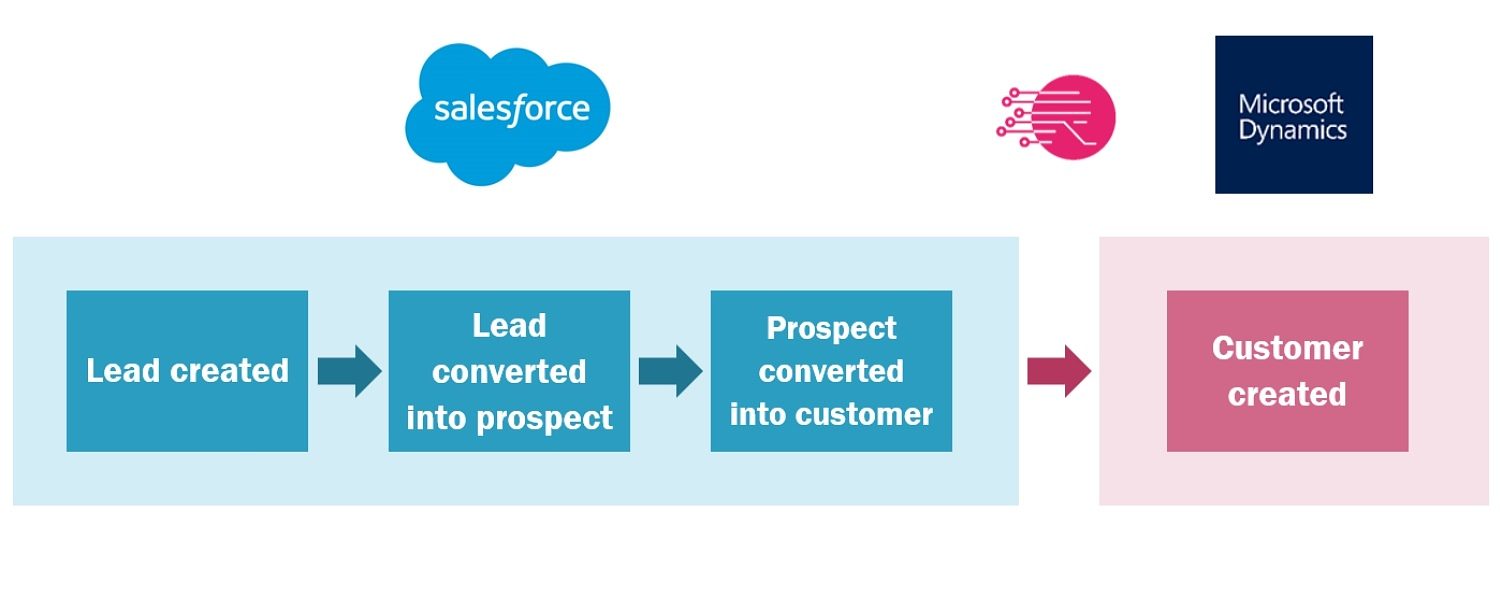
How difficult can it be to integrate accounts in Salesforce with customers in Microsoft Dynamics (or any other ERP system for that matter)? Not that difficult at first glance, you might say. And I tend to agree. See, a typical flow around account creation looks like this in your Salesforce CRM and Microsoft Dynamics ERP systems:
→
Is MS Dynamics CRM the only wise choice when you have a Dynamics ERP?
Many companies across the globe are using an ERP solution to improve the efficiency of processes across their businesses – from accounting to warehouse to inventory to fulfillment. When they have reaped the benefits that an ERP solution can give them, they soon get interest in a CRM solution to complement their ERP and bring them a new focus on customer-relationship processes and data.
→

Why integrating your ERP and CRM systems is an absolute must (case story)
“I would never go back to a world of not having this integration”… this was the overwhelmingly positive feedback one of my customers gave me during a follow-up call. See, when we have performed a system integration for a client, I like to schedule a call where we go through what has been good, what has been challenging, and any way we can improve. That allows me to check that we have delivered on our promises, and if not, make sure that we can take actions to satisfy a potentially frustrated client.
→
Salesforce or Microsoft Dynamics 365 CRM: best choice?
What is the best Customer Relationship Management (CRM) tool in 2020? Is it different from 2019? How can you select the best CRM solution for your company? Many of the companies that are using Microsoft Dynamics as their ERP are wondering if Microsoft Dynamics 365 CRM is the best solution for them, or if they should select another of the proven CRM software available, such as Salesforce or NetSuite. Websites such as Capterra provide detailed software comparisons, including for CRM solutions. For example, if you are wondering how NetSuite and Salesforce compare, you can have a look here.
→
How long does it take to integrate Salesforce with Microsoft Dynamics?
All people that have been looking into any Salesforce-ERP data integration project have been asking themselves this question: how long will it take? And the answer is obviously “it depends”. But all in all, integrating Salesforce with Microsoft Dynamics ERP can be done pretty fast using RapidiOnline.
→
How to Connect Salesforce with Microsoft Dynamics
When you connect Salesforce with Microsoft Dynamics, you share data between the two systems. This makes it simple for you to communicate with your customers, enable your teams to work together more effectively and achieve your business goals. The easiest way to connect Salesforce and Microsoft Dynamics is via RapidiOnline.
→
The future of Salesforce-Microsoft Dynamics integration
During Dreamforce 2016 I had a mission to understand how the future integration needs of companies will evolve in the next 2-3 years and what impact this evolution will have on their integration strategy. Analyzing the various sources of opinions regarding future integration needs, it came out as a pretty consistent picture.
→
Salesforce-MS Dynamics integration - Live Demo
Is it easy to integrate Salesforce with Microsoft Dynamics? It can definitely be! A system like RapidiOnline offers a no-programming, simple and fast integration option that can be used ‘out-of-the-box’, or customized and scaled to fit almost any business in a matter of days. Interested in learning more? Want to see how it works? Watch this video...
→
All you ever wanted to know about Salesforce - Microsoft Dynamics integration
Can data integration really help you optimize processes between your Salesforce and your Microsoft Dynamics? Which processes? Can it get you a step closer to your customers and help you reach your sales goals? Can’t you successfully operate with stand-alone, isolated systems?
→