Sales & Marketing Process Optimization

What Are the 9 Most Common ERP‑CRM Integrations?
Most companies don’t realize that ERP-CRM integration projects can be implemented without changing a single line of code in your programs.
→
ERP - CRM integration: How should data flow between systems?
Data between ERP and CRM systems should flow in a structured and bidirectional way, sharing key information like customers, orders, products, and payments in real time to eliminate manual work, ensure data consistency, and support better business decisions across teams.
→
A beginner’s guide to data integration
People often refer to data as the new oil. And it’s not an exaggerated metaphor. Data fuels everything – from delivering top-notch customer service to shaping strategic decisions.
→
How lead to invoice can improve your ERP-CRM Integration Process
Integrating ERP and CRM systems is one of the most effective ways to streamline business operations. Most integration projects share a common goal: eliminating manual work and connecting data across departments.
→
How to Integrate Salesforce with Microsoft Dynamics 365 (ERP Use Case)
Varitronics integrated Salesforce with Microsoft Dynamics 365 Business Central by keeping Salesforce as the CRM, replacing their former Salesforce-based ERP, Ascent, with Business Central, and using Rapidi to connect the two. This gave sales, finance, and operations one connected process without manual re-entry, while allowing each system to stay focused on its own role.
→
How AI Changes CRM: What Businesses Need to Know in 2025 & Beyond
AI is transforming CRM by automating processes, improving customer insights, and enabling predictive and autonomous decision-making. In 2025 and beyond, businesses need to focus on using AI not just as a support tool, but as a driver of sales, marketing, and customer experience through data integration and intelligent automation.
→![How Rapidi Helped Educate 360 Scale Business Automation [Case Story]](/sa/wzdqr4migsrdb0ntjdskbteclr5q/educate-case-story-blog.jpeg)
How Rapidi Helped Educate 360 Scale Business Automation [Case Story]
Educate 360 runs five professional training brands across multiple countries. The company uses Salesforce for sales and customer management and Microsoft Dynamics 365 Business Central for accounting. Before Rapidi, custom APIs connected these systems. Those APIs broke down under high transaction volumes, forced staff to enter data manually, and created inconsistencies across departments.
→
Enhance automated marketing campaigns with data integration
As we find ourselves in 2025, the marketing landscape has evolved dramatically, driven by rapid technological advancements and a deeper understanding of consumer behavior. The ability to predict and adapt to these changes is crucial for businesses aiming to stay ahead. In this era, data integration has become a pivotal element, providing exceptional insights into customer preferences and behaviors.
→
Top 9 Data Integration Problems and Solutions in 2025
We’ve tackled various data integration topics throughout 2024, from finding the best iPaaS solutions to data integration strategies. As we kick off 2025, it’s crucial to step back and evaluate some of the common issues companies face when it comes to data integration.Data integration will continue to be both a necessity and a competitive differentiator.
→
Benefit & Advantages Of Data Integration
This article explores the significant advantages of integrating ERP and CRM data systems by highlighting six key benefits, such as improved efficiency, seamless data sharing, and enhanced decision-making capabilities. By integrating these systems, businesses can eliminate manual data handling, reduce errors, and empower their teams with real-time access to crucial information, ultimately driving growth and competitive advantage.
→
The significance of data replication in the retail industry
Successful businesses all have one thing in common: they function and make informed decisions based on accurate, real-time data.
→
How to boost your Salesforce user adoption in 4 easy steps
So you have selected Salesforce to complement your Microsoft Dynamics ERP and get rid of old, disconnected processes.
→
What are the benefits of Salesforce CPQ? 8 advantages for sales teams
Salesforce CPQ helps sales professionals optimize and automate the entire sales process, from initial product configuration to final quote delivery. It enables sales teams to generate accurate quotes quickly, reduces the amount of human errors by automating pricing and configurations, and frees up sales teams to focus on selling. It can also suggest cross-selling and upselling opportunities and gives sales leaders improved data and tracking for better decision-making.
→
Maximizing ROI: Integrating Salesforce and ERP Systems for Success
There are many reasons to integrate Salesforce with ERP solutions, such as Microsoft Dynamics ERP (Dynamics 365 product suite such as Dynamics 365 Business Central, Finance (former Finance & Operations), Sales (former CRM), NAV, AX, GP). Integrated solutions provide accurate data to your staff.
→
Microsoft Dynamics 365 Business Central & Dynamics 365 Sales Integration
Are you contemplating a switch from Salesforce to Microsoft Dynamics 365 Sales or simply looking to integrate Dynamics 365 Business Central with Microsoft Dynamics 365 Sales?
→
Data stewards: a must for data-driven companies
You have invested much in your systems. Your CRM takes care of your customer-related operations. Your ERP helps your staff handle administrative and operational tasks and control the billing cycle. You may even have a SCM system to streamline your production and supply chain processes. An ecommerce platform may help you sell online.
→
CRM ERP INTEGRATION TO BOOST CUSTOMER SERVICE
Customer service is or should be a priority of all business leaders. Excellence in customer service is a key to long term commercial success.
→
6 signs you really need CRM
After a few decades of existence, there is no doubt that CRM has been a game-changing tool for companies. CRM (Customer Relationship Management) is the biggest software on the market. CRM has helped organizations worldwide focus on relationships with customers, grow faster and work smarter.
→
WHY DATA DRIVEN COMPANIES OFFER BETTER CUSTOMER SERVICE
IT leaders all over the world have a strong focus on providing management with better information. Reliable data empowers business executives to make better decisions.
→
Get a step closer to your customers with ERP-CRM integration
How many efforts do your salespeople make every day to know their clients better? I’ve spent most of my career in sales, both as sales guy and as sales director. Along the years, I have had the opportunity to observe many interactions between salespeople and their clients. One thing that has always been striking me is that, often, the little things we do in an effort to get closer to our clients are those that make a huge difference in our relationship with them and eventually in their likelihood to purchase our products or services. In my experience, turning the vendor-customer relationship into a partnership is the most efficient sales approach.
→
What to do with cold leads – or the wonders of lead nurturing
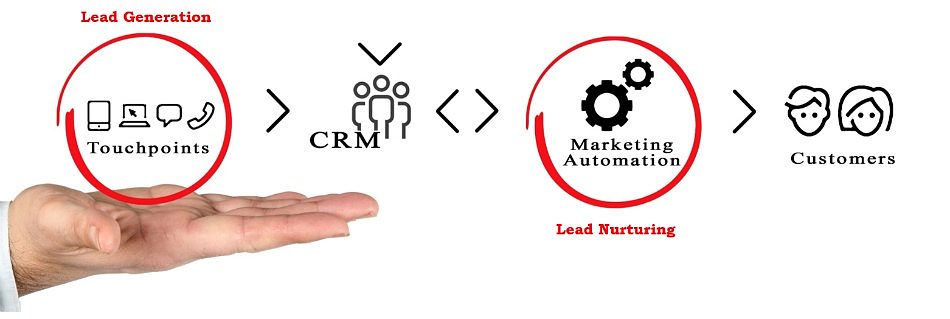
The biggest challenge of marketers today is not necessarily about lead generation. In the past decades, it has become easier for organizations to attract new potential customers online. The internet has drastically changed the purchasing behavior, allowing people to find information, compare and analyze various offerings by themselves. Many companies have understood that investing in analytic and SEO optimization tools can help increase lead generation exponentially.
→
How to integrate Accounts and Contacts between Salesforce and Microsoft Dynamics?
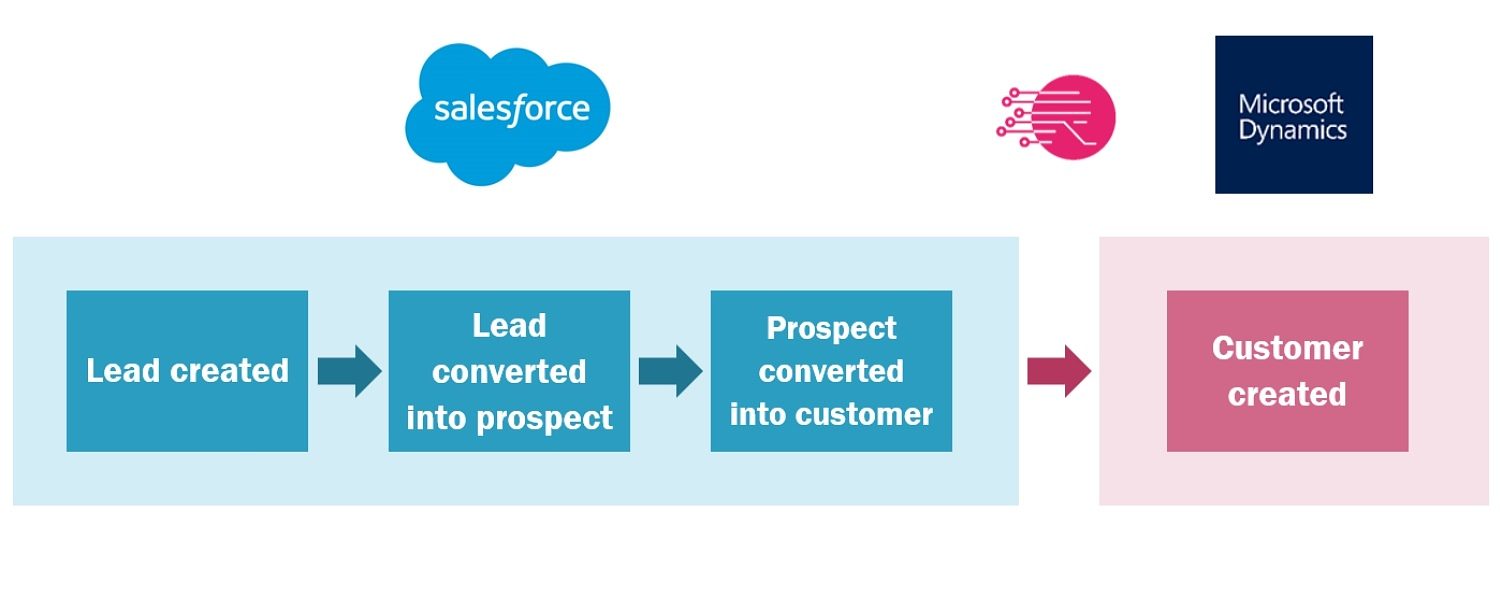
How difficult can it be to integrate accounts in Salesforce with customers in Microsoft Dynamics (or any other ERP system for that matter)? Not that difficult at first glance, you might say. And I tend to agree. See, a typical flow around account creation looks like this in your Salesforce CRM and Microsoft Dynamics ERP systems:
→
Do you need real time data integration?
Most of the IT executives that are looking for a data integration system want to have real time integration. While it is often what they want, it is rarely what they need.
→
Salesforce or Microsoft Dynamics 365 CRM: best choice?
What is the best Customer Relationship Management (CRM) tool in 2020? Is it different from 2019? How can you select the best CRM solution for your company? Many of the companies that are using Microsoft Dynamics as their ERP are wondering if Microsoft Dynamics 365 CRM is the best solution for them, or if they should select another of the proven CRM software available, such as Salesforce or NetSuite. Websites such as Capterra provide detailed software comparisons, including for CRM solutions. For example, if you are wondering how NetSuite and Salesforce compare, you can have a look here.
→
Do you need both ERP and CRM? A close look with Rapidi
Do you absolutely need to have both ERP (Enterprise Resource Planning) and CRM (Customer Relationship Management)? Isn’t it enough to use just one of them? As a stakeholder in a business, you're best placed to understand the value you get from ERP and CRM systems, and whether you need both of your current solutions.
→
Bad data issues? Solve them with data integration
Bad data can completely undermine your sales efforts. Research from Experian Data Quality has shown that the average company loses 12% of its revenue as a result of inaccurate data. 95% of organizations see negative impacts from poor data quality, resulting in wasted resources and additional costs, ineffective business initiatives, poor customer experience, delayed data migration projects, and much more.
→
3 steps to get started with your Salesforce – MS Dynamics ERP integration
When you first started using salesforce.com and Microsoft Dynamics in your business, you probably found that using those systems made running your business much easier. But as your business grows, using systems like these in isolation from each other can actually start to make life more complicated. As different teams collect, record and use data in different ways, it’s hard to know how to make systems work together. The answer is a Salesforce ERP data integration. This simple integration allows you to bring together all the vital data you need in one place from Salesforce and your ERP. No more worrying about how to share information between teams, no spending hours copying data manually and no mistakes. Just real-time, automated sharing.
→